
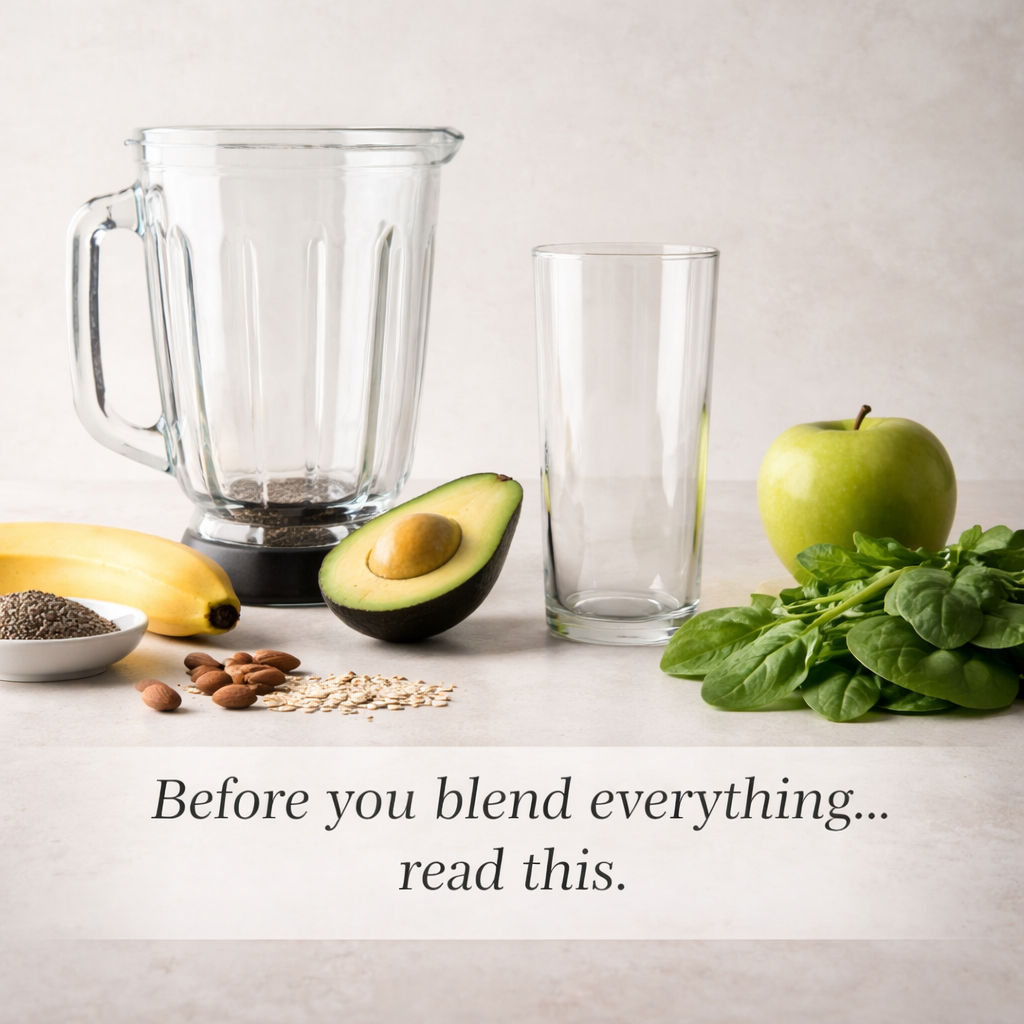
Where They Came From, What They’re For, and Why They Exist
Smoothies didn’t start as a lifestyle.
They started as a tool.
Originally, smoothies were used in clinical, athletic, and medical contexts. They existed to make nutrients easier to consume when chewing was difficult, appetite was low, or digestion needed support. Hospitals, athletes, and people recovering from illness used blended foods because they reduced effort - not because they replaced eating.
Somewhere along the way, that purpose got distorted.
Today, smoothies are often marketed as:
- A replacement for meals
- A shortcut to weight loss
- A “clean” way to eat
- A productivity hack for busy lives
That version of smoothies is not where they came from - and it’s not what they’re best at.
What a smoothie actually is
At its core, a smoothie is blended whole food.
Nothing more. Nothing magical.
Blending breaks food down mechanically, making it:
- Faster to consume
- Easier to digest for some people
- Less demanding on chewing
That’s the entire function.
A smoothie does not:
- Change the nutritional value of food
- Improve food quality
- Override digestion
- “Reset” your body
It simply changes form, not function.
Why smoothies exist
Smoothies exist to support nutrition when:
- Appetite is low
- Energy is limited
- Time is short
- Recovery is needed
- Solid food feels heavy
They are meant to assist eating, not replace it.
Used properly, smoothies:
- Help people meet nutrient needs
- Reduce decision fatigue
- Support recovery and consistency
- Make nutrition more accessible on hard days
Used improperly, they become a workaround - and that’s where problems start.
The key distinction most people miss
Smoothies are supplemental fuel, not primary nutrition.
They work best when:
- Paired with regular meals
- Used intentionally
- Built from real ingredients
- Consumed as support, not avoidance
When smoothies are framed this way, they’re helpful, flexible, and sustainable.
When they’re framed as a solution to everything, they stop being useful.